
Kitchen Cabinet Quotes in McDonough, GA
Prepare a cabinet list and compare what each kitchen quote includes.
Send my cabinet inquiry
Or call (562) 203-3232. Calls only, we do not receive text messages.
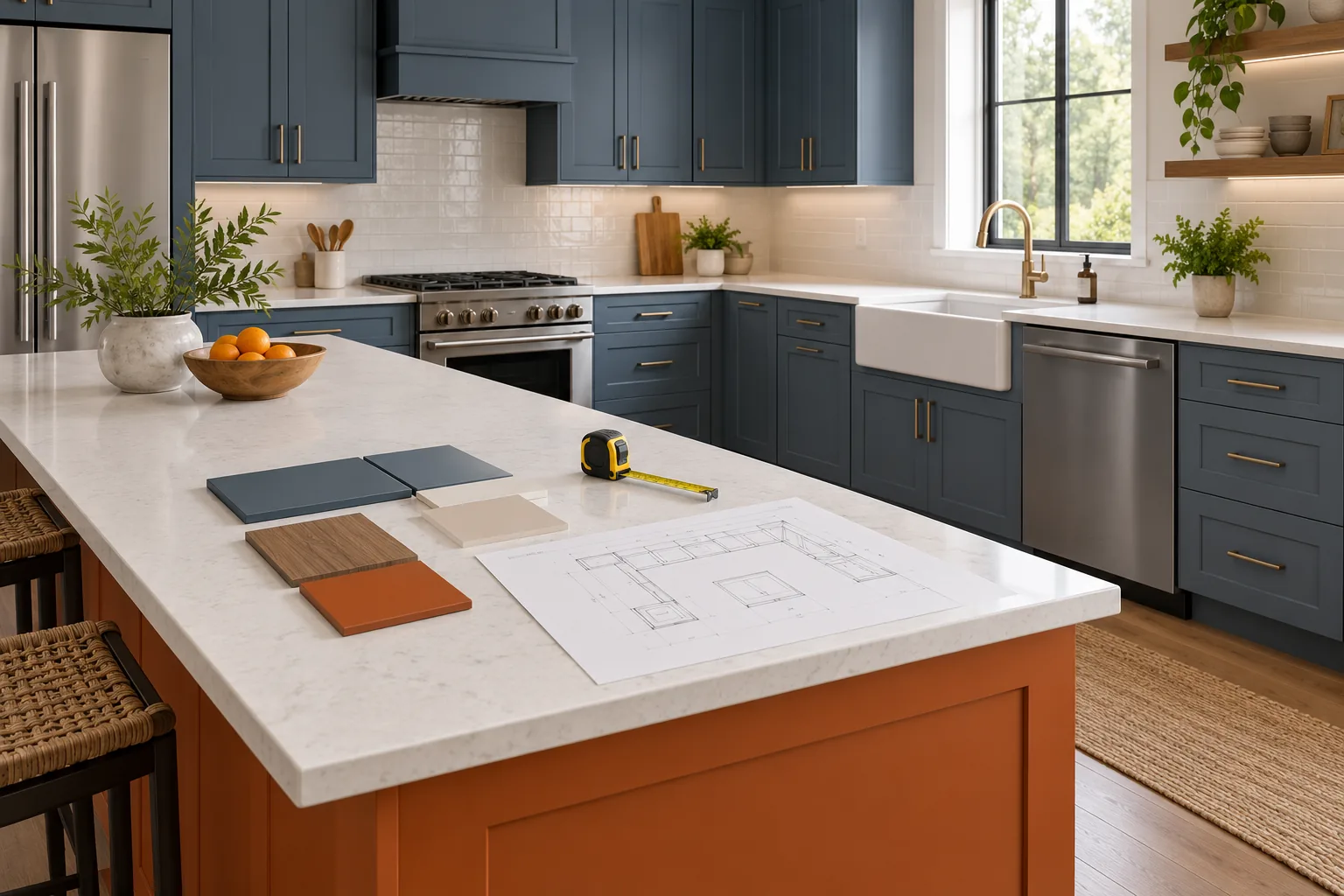
Buying questions: kitchen cabinet quote comparison
Keep the retained and proposed parts visible in each quote request so sellers do not price different interpretations of the project. The Plan owner records inquiries for review. It does not inspect existing units, approve a matching finish, supply goods, or perform alterations. The actual seller and any separately engaged professional must confirm their own scope and findings.
About McDonough Cabinet Plan
Know who handles each part
Independent cabinet buying information and quote-request service. We do not manufacture, stock or install cabinets. A referral, supplier response, appointment or purchase is not guaranteed. Product availability, delivery and installation must be confirmed directly with the seller or separately engaged contractor.
Draw the boundary between retained and supplied pieces
Mark the retained run on the room sketch and identify the intended new storage separately. Describe the reason for retaining those units without assuming they are suitable or structurally compatible with new goods. The proposed transaction should make clear what the seller is being asked to supply and what stays outside its order.
In the hypothetical purchase, the buyer wants new units on another wall and hopes the room will look coordinated. That goal is not evidence of a match. Ask what product information and observations would be needed to assess the intended relationship. Keep the appearance question distinct from dimensions, support, or other fit questions.
Send the same boundary to every seller. If one proposes a broader replacement, record it as an alternate arrangement rather than an equivalent price for the original request. The buyer can consider both scopes deliberately. A comparison becomes misleading when one total includes goods the other seller was never asked to price.
Identify existing facts that a new offer relies on
Record accessible dimensions and relevant retained appliance models with clear reference points. Identify what cannot be observed while existing goods remain in place. A seller needs to know which facts are preliminary; a person approving fit needs a plan for resolving them. Guessing hidden details can make an apparently exact order unreliable.
Request whatever existing-product information you can establish, such as identifiable references or documentation. If a reference is unknown, say so. Do not assume a familiar style describes construction or connection requirements. The relationship between old and new needs assessment for the actual proposed combination, not a broad claim of compatibility.
The IKEA input checklist supports room and appliance preparation. It does not establish the condition of retained cabinets or their ability to work with another product line. Keep its checklist role separate from any actual assessment offered by a seller or professional.

Compare the supplied goods without hiding the edge details
List proposed new units, fronts, hardware, and visible completion pieces by recognizable reference and quantity. Ask about the edges where new goods relate to the retained arrangement. A main-box list may not explain every panel or trim item needed for the intended appearance. Those pieces belong in the actual supply scope where applicable.
For each seller, record offered, excluded, alternate, or unanswered against the intended line. If the seller cannot match a piece or proposes a different arrangement, preserve that difference. A buyer may accept a coordinated contrast rather than a claimed match, but it should be a stated choice supported by the offered products.
Ask who will assess the proposed relationship before ordering. Product identification is different from field approval. If one seller accepts a broader check, obtain its actual scope; do not infer it from an encouraging conversation. The Plan does not vet an unknown supplier's ability to inspect or adapt the room.
Keep appearance decisions and work decisions distinct
A finish sample can inform a preference while leaving fit or related work open. Ask how the offered sample relates to the exact new goods. Comparing it with retained materials can raise a useful question, but it does not guarantee the final appearance. Record any uncertainty you deliberately accept.
If the intended arrangement requires independently undertaken work around the retained units, ask the responsible party what it will do and what it needs to check. The product seller's quote should not be assumed to cover it. Keep the work scope outside the product comparison unless the actual offer explicitly includes it.
The supplied local plan index identifies McDonough separately from other records. It does not describe kitchen age, property approvals, or the ease of partial replacement. Any property-specific permission question needs its own relevant answer. Avoid turning a locality name into a reason to assume that the proposed work is simple.

Cost estimates for a partial replacement scope
No observed McDonough prices are supplied for a partial kitchen purchase. Request an estimate for the new units and required completion pieces, with the retained boundary stated. If a seller proposes a broader replacement, obtain it as a separately described alternative. The difference concerns more goods and possibly more responsibilities, not just a better price.
Identify offered fulfillment, applicable charges, and independently arranged assessment or work. Mark unquoted tasks as unknown. Retaining goods can change the purchase scope, but does not establish a saving until the complete intended arrangements are understood. Ask whether the estimate relies on a compatibility answer that has not yet been obtained.
Partial-replacement estimates are subject to change with checked relationships, selected pieces, and accepted handling; the seller's written quote establishes its supplied scope and amount. Any outside professional work needs separate documented terms. The Plan does not promise a price benefit, match, or accepted alteration service from retaining an existing cabinet run.
Resolve the boundary in the final purchasing version
Before ordering, compare the current quote with the sketch and open-question record. Make sure retained units are not accidentally counted as supplied goods and proposed new pieces are not omitted. Ask for corrections where versions disagree. Preserve the specific answers supporting any relationship between the two groups.
Obtain the seller's approach to substitutions and destination acceptance. A replacement product may require another check against retained materials or adjacent elements. Approval of one identified new combination should not become permission for any similar-looking range. Keep the accepted references connected to the receiving list.
An inquiry should explain the McDonough partial-purchase boundary and the question still unresolved. The owner reviews the record, while potential contact sharing requires permission and recipient acceptance. No automatic referral or field visit follows. Final product and work commitments must come from the parties accepting the actual transaction.
Inquiry process
From buying questions to a possible supplier quote
Sending an inquiry does not reserve products or book work.
Describe the purchase
Include project ZIP, room, approximate cabinet list and preferred timing.
Clarify requirements
Identify assembly, access, measurements and any separately arranged labor.
Confirm referral availability
An inquiry can be referred only if a suitable seller accepts the location and product request.
Review seller terms
Confirm the final drawing, itemized price, payment, delivery and return terms directly before ordering.
Illustrative product choices
Illustrative product visualizations, not completed work, local properties or supplier facilities.
Local buying information
Local inquiry guides
Questions
Kitchen Cabinet Quote Comparison: Common Questions
Can I compare a partial quote with a whole-kitchen quote?
Treat them as different arrangements and identify the supplied goods and responsibilities in each. The buyer can choose between scopes, but their totals do not measure the price of the same order. Preserve the retained boundary and ask each seller to explain its proposed alternative.
Does a familiar finish name prove a match with existing units?
It does not establish the appearance of the actual new and retained materials together. Obtain evidence for the exact offered product and identify uncertainty. A sample can support a preference decision, while compatibility and any related work need separate checks.
What if existing-product references are unknown?
State that limitation and ask the relevant seller or professional what information is needed to assess the intended relationship. Do not replace an unknown reference with a guessed category. Keep affected order decisions provisional until the responsible party has sufficient evidence.
Will the owner inspect the retained cabinets?
Inquiry review does not establish an inspection or alteration service. Identify who will assess the relevant condition and obtain that person's accepted scope. Any possible introduction requires consent and separate willingness, without automatically securing a supplier or field visit.
Talk to us about kitchen cabinet quote comparison
Describe the purchase and project ZIP in McDonough. Supplier acceptance and any referral are confirmed separately; no visit or quote is booked by this form.
Calls only, we do not receive text messages.